
Commercial Snow Plowing and Ice Management
Winter turns a commercial property into a liability question before it turns into anything else. The moment snow starts falling, the parking lot, the walkways, and the entrances are all your responsibility, and they stay your responsibility at four in the morning on a Sunday.
Commercial snow plowing exists to take that on: clearing snow and managing ice on parking areas, drive lanes, walkways, and entrances so a property stays open, accessible, and defensible.
Apex Landscaping has provided commercial snow and ice management across Chicagoland’s north and northwest suburbs since 1991.
Apex provides snow and ice management for commercial properties only. We do not offer residential snow removal.
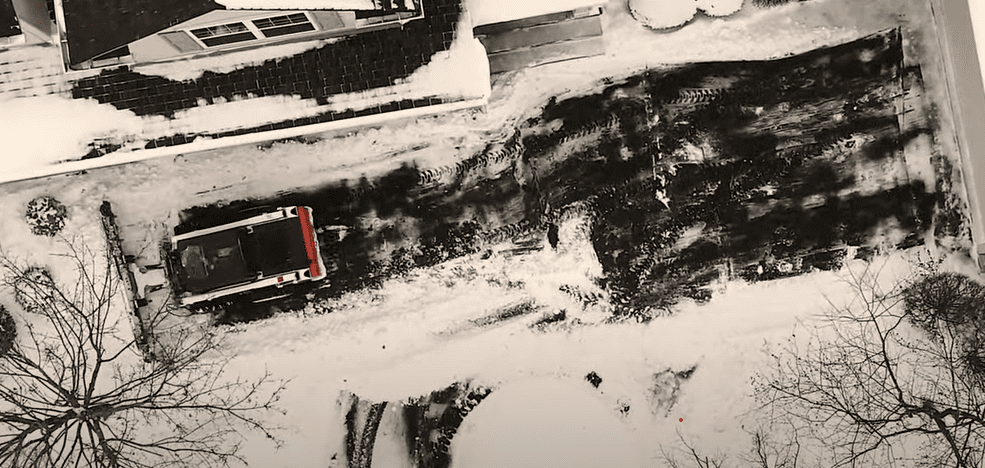
What a commercial snow contract should specify
Most disputes trace to a contract that did not define the trigger, the window, or the standard.
Trigger depth. The accumulation at which service begins. Two properties can sign the same provider at different triggers, and the trigger is the single largest driver of both service level and cost.
Response window. How long after the trigger crews are on site, and whether that differs overnight, at weekends, and during business hours.
Scope by surface. Parking areas, drive lanes, loading areas, walkways, entrances, and stairs are different work with different equipment and different priorities.
Clearing standard. Whether surfaces are cleared to pavement, and how the priority sequence runs across a large site.
Ice management. When de-icing material is applied, what material, at what rate, and whether it is included or billed separately.
Snow relocation and hauling. Where snow is stacked, and at what point it has to be relocated or removed from the property. On a constrained site this becomes the binding constraint by February.
Service documentation. What you receive after each event: time on site, work performed, materials applied. This is what a liability claim turns on.
Priority and communication. Where you sit in the provider’s route order, and who you call.
Billing structure. Per event, seasonal, or hybrid, and what triggers a billable visit.
Trigger depths, response windows, and 24/7 coverage
Snow does not arrive during business hours. A commercial snow operation is built around being able to mobilize at any hour and to keep running through a multi-day event.
What that requires in practice: monitoring forecasts and mobilizing before accumulation rather than after; crews and equipment staged for the route; the capacity to service the whole route inside the contracted window; and the ability to re-service a property during a long event rather than clearing once and leaving.
The questions worth asking a provider are about capacity, not intention. How many properties are on the route, how long the full route takes, and what happens when an event exceeds the plan.
Ice management and liability
Ice is the greater liability of the two. Snow is visible and people adjust; ice frequently is not.
Where ice forms. Downspout and gutter discharge points, low spots where meltwater collects, north-facing surfaces that never see sun, the base of slopes, and anywhere refreeze follows a daytime thaw. These are predictable and they belong on a site map before the season starts.
Refreeze is the pattern that catches properties out. A daytime thaw followed by an overnight drop turns a cleared, wet surface into a sheet. That cycle is common here and it is what monitoring exists for.
Material choice. De-icing materials differ in effective temperature range and in how aggressive they are toward concrete, metal, and planting. Application rate matters as much as material.
Documentation. Time-stamped records of each visit, work done, and material applied are what allow a property to demonstrate a reasonable standard of care.
Walkways and entrances first. Most incidents happen where people walk, not where they drive.
Site planning before the season
Most of what makes a winter go smoothly is decided before it snows.
Walk the site with your provider in the fall. Establish the plan while the pavement is still visible.
Mark hazards and edges. Snow stakes along curbs, drive edges, islands, and any low obstruction guide plow operators once everything is white. This is the cheapest damage prevention available.
Agree snow stacking locations. Where snow is piled matters more than most properties realize. Piles on planting beds kill the planting; piles blocking sightlines at exits create a hazard; piles over drains cause flooding when they melt. Agree the locations in the fall.
Protect vulnerable planting. Beds along drives and walks take both plow impact and salt. Some planting can be protected physically, and some should be replaced with salt-tolerant species. See commercial landscape maintenance.
Check drainage before freeze-up. Blocked drains and low spots that hold water in November are ice sheets in January. See the importance of proper drainage in landscaping.
Confirm the contact chain. Who the provider calls, and who calls the provider, before the first event rather than during it.

How to compare providers
Capacity for your property type and size, and honest route information.
Equipment matched to the site. Large lots and tight urban sites need different equipment, and a provider with only one kind will struggle on the other.
Insurance, verified. Certificates direct from the insurer. Snow and ice work carries real slip-and-fall exposure.
Documentation practice. Ask what a post-event report looks like. A provider without one is a provider you cannot evidence.
Communication in an event. How you reach someone at 3am, and whether that is a person or a voicemail box.
Dedicated snow operation. Whether snow is a core service with staged equipment and crews, or something attempted with summer equipment.
References from comparable properties, and specifically about severe events rather than ordinary ones.
Compare on the same trigger depth and the same scope, or the numbers mean nothing.
Apex has served 60 municipalities across Chicagoland.
Chicagoland’s winter, specifically
Our winters are variable rather than uniformly severe, and the variability is the difficulty. A season can deliver one large event or a long run of small ones, and the second pattern is harder on a contract written around per-event billing.
Lake-effect bands can drop very different accumulations on properties a few miles apart, which is why a provider’s local route density matters. Freeze-thaw cycling through the season is what makes ice management, rather than plowing, the larger share of the work in many winters.
Frequently asked questions
When should a commercial snow contract be signed?
Well before the season. Fall is when site walks happen, stakes go in, and stacking locations are agreed. Contracting after the first event means starting without a plan.
What trigger depth is right?
It depends on the property and its use. A medical or retail site with continuous traffic usually needs a lower trigger than a site that is empty at weekends. This is a decision to make deliberately, not to accept as a default.
How often is a property serviced during a storm?
For a long event, more than once. A property cleared at the start of a twelve-hour snowfall is not cleared by the end of it. The contract should say how re-service is handled.
Who is liable for a slip and fall?
Responsibility depends on your contract, your insurance, and the circumstances, and it is a question for your counsel and your carrier. What a property can control is a documented, consistent standard of care, which is why post-event records matter.
Is de-icing included in plowing?
Sometimes, and often not. It is one of the most common gaps between two proposals that otherwise look similar.
What happens if there is nowhere left to put the snow?
On a constrained site, relocation or hauling. This should be addressed in the contract rather than negotiated in February.
Does Apex offer residential snow removal?
No. Our snow and ice management is for commercial properties only.
Working with Apex Landscaping
Apex Landscaping has provided commercial snow and ice management across Chicagoland’s north and northwest suburbs and the North Shore since 1991. Because we also maintain many of the same properties through the growing season, our crews know the sites they are plowing, which is what keeps curbs, islands, and planting intact through a winter. We are licensed and insured.
See our snow management page, commercial landscape maintenance, commercial landscaping services, or start a conversation about your property.
Fall is the right time to have this conversation. Site walks, stakes, and stacking plans all have to happen before the first event.