Best Tree Services in the North Shore
Are you looking for tree services in the North Shore? Your Illinois or Wisconsin property may need tree trimming or tree removal services. Cutting branches off of growing trees may seem contrary to the point of growing them. However, it is a vital part of curating overall tree health. You should think about tree trimming as similar to a person getting a haircut. For hair to continue to thrive, you have to trim split ends. The same goes for trees. You get rid of the damaged ends to help the tree continue to grow. Follow along to learn more about the benefits of tree trimming and where to find the best tree services in the North Shore.
Reasons to Invest in Commercial Tree Service
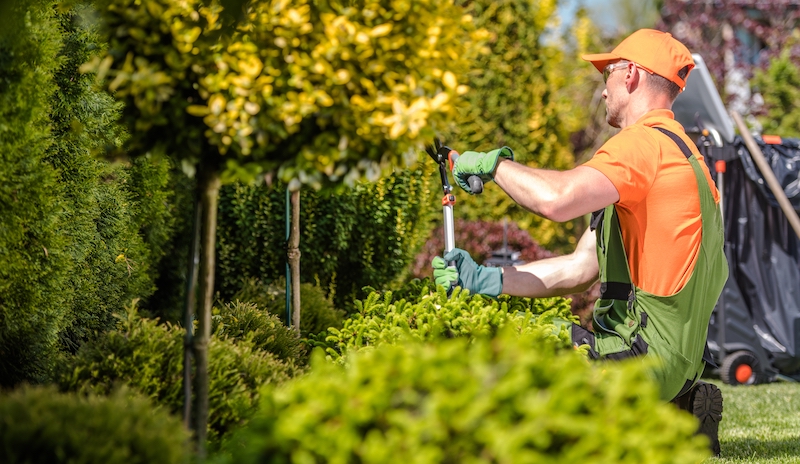
There are plenty of reasons to invest in commercial tree services, just as there are to invest in residential landscaping. However, taking care of the outward appearance of a commercial property can often be more pertinent. Of course, homeowners need to pay attention to their landscape. There’s a lot at stake for anyone who neglects to take care of their property. You don’t just risk lowered property values and less curb appeal. By letting your lawn go, you invite weeds and pests that can destroy your lawn and be a real danger. Plus, you can get in trouble with your HOA or city for refusing to care for your yard. When enforced, violating laws about your lawn can land you with hefty fines. You could also develop a negative reputation with your neighbors for having a lawn that sticks out negatively.
These bad things can affect commercial property if you don’t take care of your landscape. And on top of all that, you’re probably trying to attract customers to your business. In this case, the way your property looks directly affects your company. The outside of your business provides a first impression to customers and employees. As such, you can potentially attract new customers just by having an attractive outside landscape. Of course, this leads to more sales and, ultimately, more profits. Unattractive surroundings can become part of your image and keep people from returning to your business. In addition to that, employee morale can suffer in ugly surroundings. If your employees don’t enjoy being in the place where they work, they’re less likely to stick around. Having to hire and train new employees all the time costs you in the long run.
Why Tree Service in the North Shore?
In Chicago, Northern Illinois, and southeast Wisconsin, a lot of the year, landscapes are barren. It’s no secret that the winter months here can be challenging. The weather and lake-effect wind are no joke. That’s why it’s essential to spruce up your outdoor property whenever possible. It’s been proven that landscaping can positively affect your mental well-being. This is particularly important in terms of retaining customers and employees. If people associate a place with feeling good, they are more likely to return to that place. For business owners that work directly with customers, this is incredibly important.
But landscaping is more than aesthetics. It can create better safety and security for customers and employees. Having a well-maintained lawn makes it harder for people to sneak around on the property. Installing lights outside your business is one way to increase security.
Tree Trimming Near Me
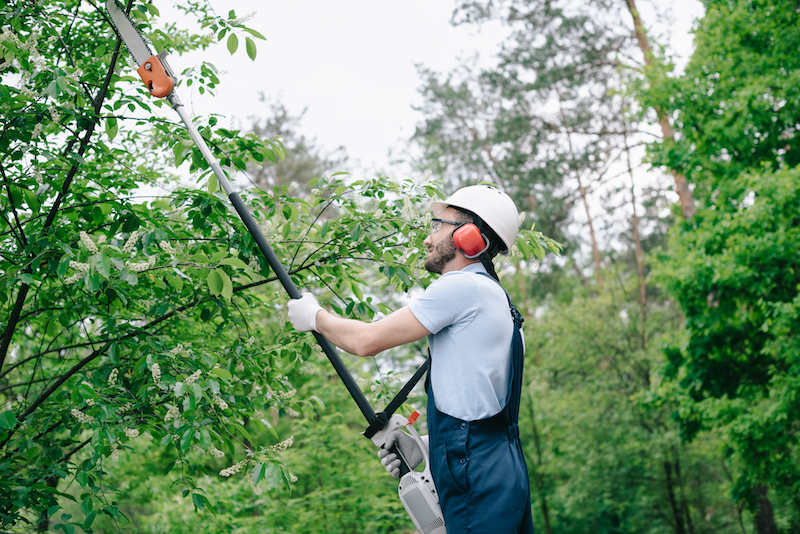
Trimming, in general, is a process that can be done to plants like trees, hedges, and shrubs. Tree trimming is a specific landscaping service that typically involves the removal of overgrown branches. It’s an essential aspect of cultivating the overall health of the tree. It also allows property owners to maintain a specific shape for each tree. Usually, trimming tree shapes is an aesthetic preference. However, it sometimes keeps plants from growing, where they might become a nuisance or a hazard for people nearby. Commercial tree services ensure the health of the landscape and the safety of customers and employees.
Sometimes, a tree removal service is necessary. Many professional landscaping companies offer tree removal if a tree becomes a problem. A tree removal service might be necessary if a tree becomes diseased and goes without proper care. Or, sometimes, a large part of a tree gets damaged from age, weather, or pests and must be removed. And occasionally, a tree might grow too close to a power line, sewer line, or a building. This can be a problem and might pose a threat to people nearby, in which case, tree removal is necessary.
Where to Find the Best Tree Services in the North Shore
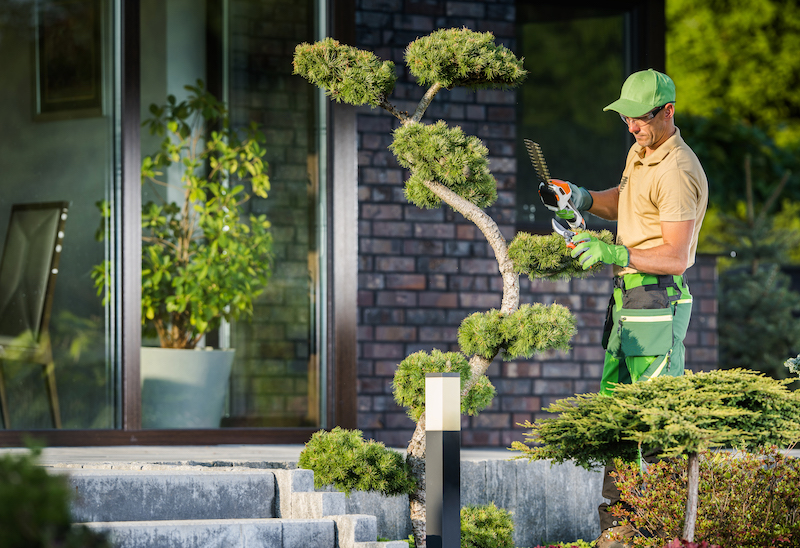
You might have Googled “tree trimming near me” to find a trustworthy landscaping company. Now you know how necessary tree trimming and landscaping for your commercial property are. So, it’s time to find the right professional landscapers for your business. If you’re looking for a company that provides the best tree services in the North Shore, check out Apex Landscaping. We have offered revolutionary landscaping solutions for the North Shore and surrounding areas since 1991. Whether you need tree trimming, tree removal, regular lawn maintenance, snow management, or a new landscape design, we’re your team.
In terms of tree care, we offer the following:
- Preventative maintenance
- Drought services
- Emergency tree care
- Storm damage care
- Fertilization
- Soil management
Join forces with Apex Landscaping. We are licensed, certified, and insured to care for your company’s trees. Our experts do their best to save diseased and damaged trees before they must be removed. Schedule a consultation today.